
Every story has a beginning.
There’s a particular kind of quiet that settles over the polytunnel in the early morning. Before the day properly begins, before the school run and to-do list kick in, it’s just you and several thousand seedlings trying their best. Some mornings I find myself lingering longer than I should, just soaking it all in.
Hello, I’m Jules.
This is THE inaugural post from Darling Flower Farm. Perhaps writing a blog is old-fashioned, but I have a love for writing, and the ability to tell a story over the immediacy of social media appeals to this old-fashioned soul.
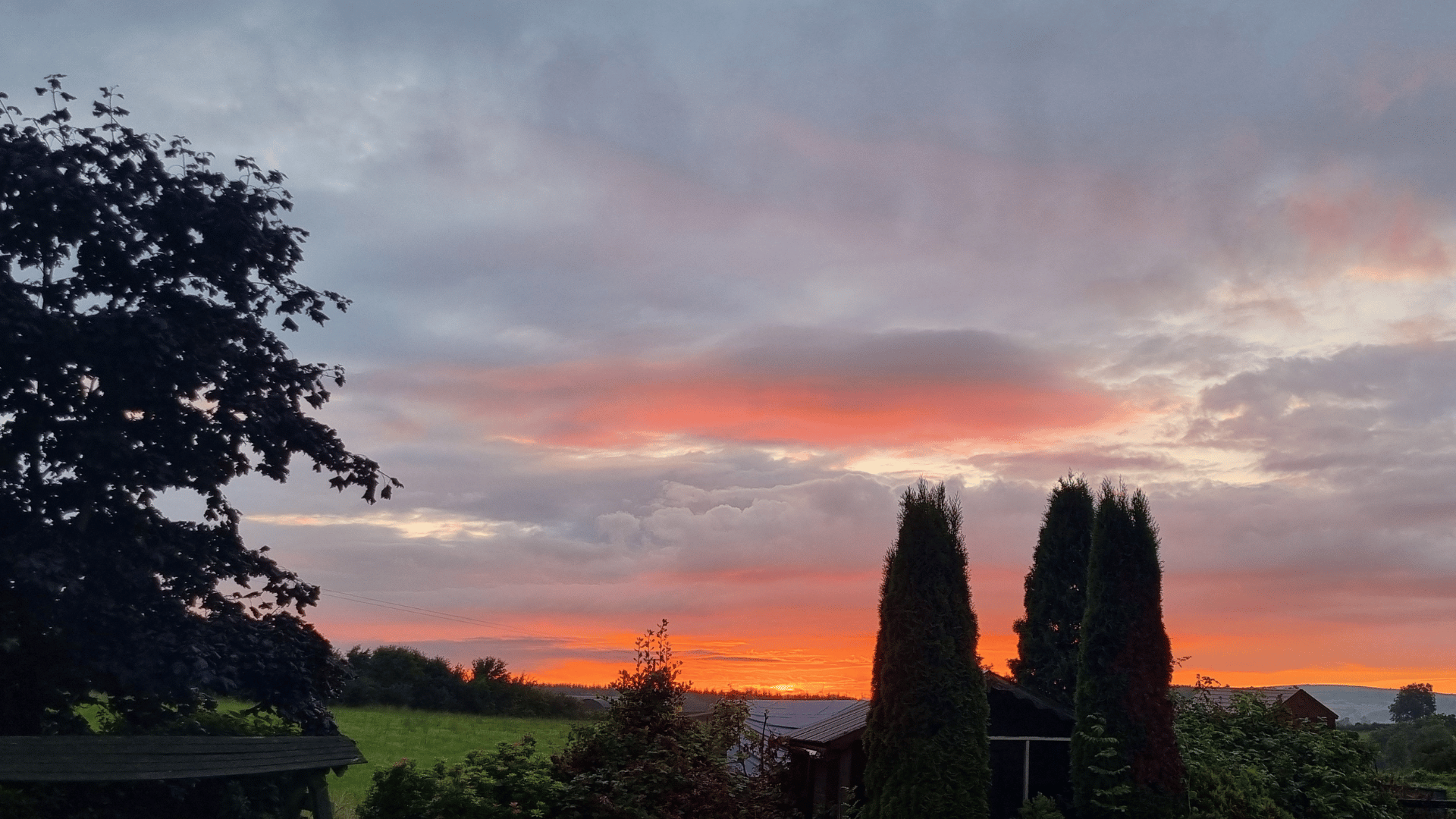
The beautiful view from our kitchen window overlooking the sunset over our acreage.
Our dream for a flower farm has its tiny roots in 2024, where we began growing from our home garden, learning about the soil, the sun, the sky - and the way the wind writes the weather here. Having made our way over from Australia in 2023, we found ourselves growing flowers at the opposite of the elements of the southern hemisphere! Where we previously experienced drought, cockatoos, a mouse plague, possums and kangaroos trying to eat our beloved plants - here we battled against endless rain, flooded fields, compacted soil and a whole new raft of hungry wee beasts. We survived ‘slugmaggeddon’ and, undeterred, we continued to grow different varieties of cut flowers and learn about the land we have long since come to love.
When we learnt that the British and Irish cut flower industry imports around 90% of its flowers, those tiny roots of our dream began to dig deeper into our hearts, taking shape and instilling a sense of purpose, a mission of sorts. Whilst we can’t affect change overnight, we can grow something real, right here, in this valley, for the people around us - and we can do it in a way that works with the land, rather than against it.
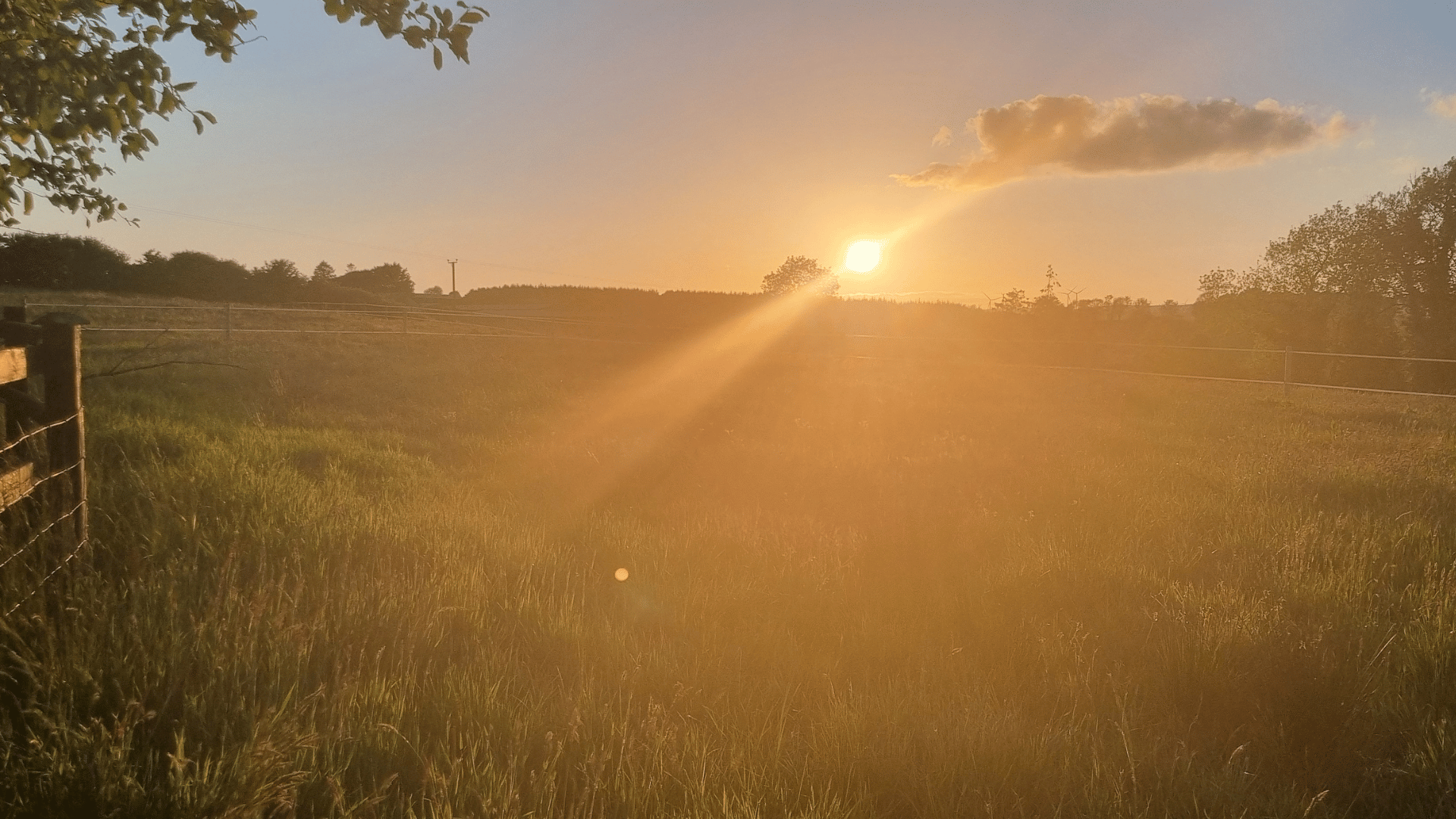
What has since become our annuals field and polytunnel space.
In 2025 we decided to go all in and significantly invest in infrastructure and our future plans. We own a 4 acre field next to our home, and after many, many discussions about what made sense from a financial, physical and emotional perspective, we decided to install a 20ft x 60ft polytunnel and purchase over 1,000 bare root peonies for planting in the autumn. We have one-fifth of an acre under production for annuals in 2026, with additional areas for perennials and further peony planting currently in production.
The farm is run by myself and my partner John (occasionally assisted by our 7 year old daughter Savannah). We’re not a huge operation - we do everything ourselves, from building and construction to sowing, growing and harvesting - which means we have an intimate knowledge of the soil and every variety we grow.
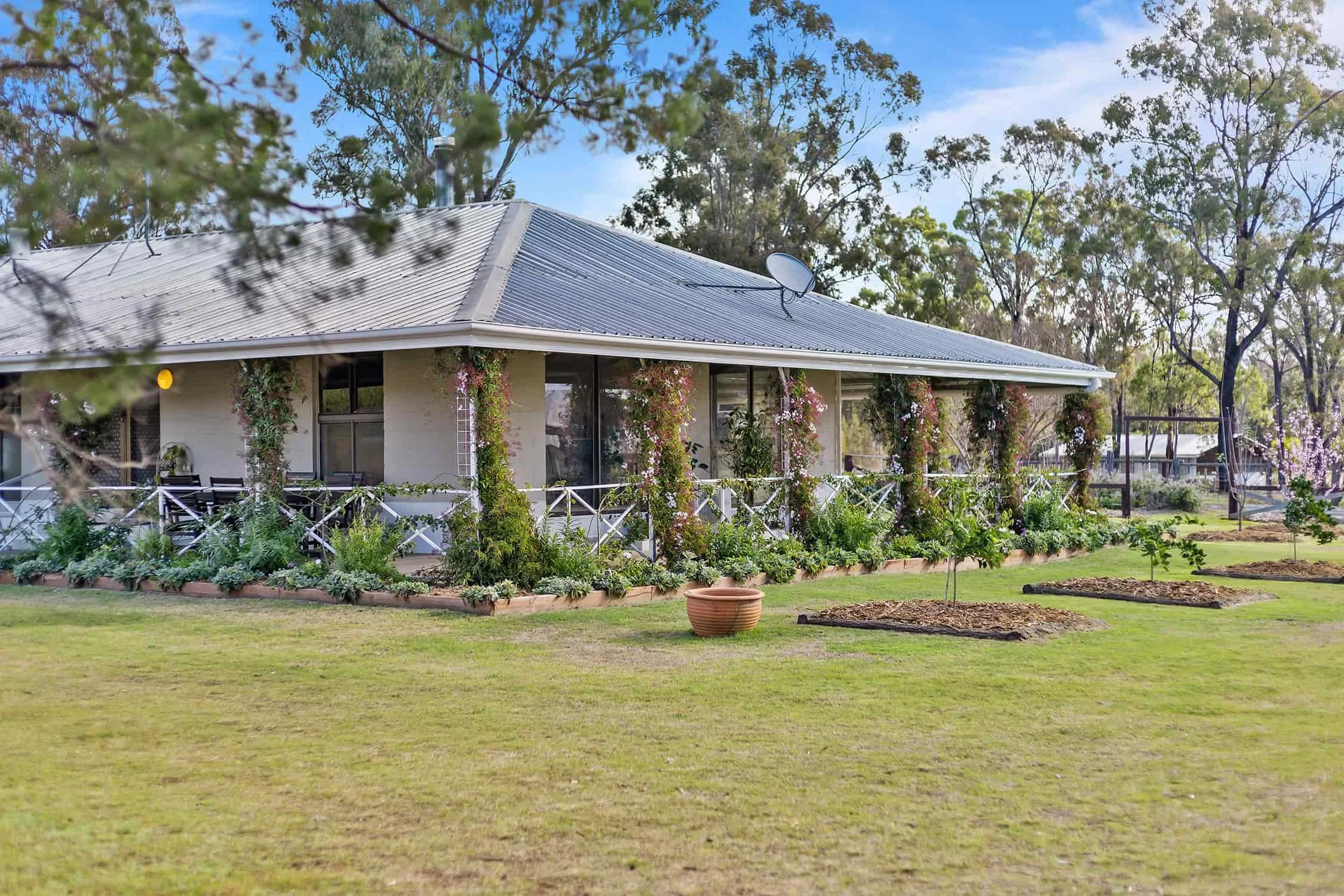
Our farmhouse in Queensland, Australia.
Our experiences with growing flowers, fruit and fruit trees in Australia encouraged us to look at growing differently, to nurture the soil first and work with natural systems rather than chemically fighting them. We grow regeneratively, which is a word that gets bandied about a lot these days and means different things to different folks. For us, it means focusing on the soil, avoiding synthetic inputs and approaching the farm as an ecosystem rather than a production line. It means observing and adapting to the environment, rather than forcing it unnaturally. It’s not always tidy! Our 4 acres was previously used for cutting silage, which is a hardy, relentless grass that can sprout shoots from a few millimetres. Choosing to be chemical free means we are investing in weed membrane for the first few years before replanting with cover crops and grass paths that are easy to maintain. Choosing to do what is right doesn’t always mean choosing what’s easy, but it’s always worth it.
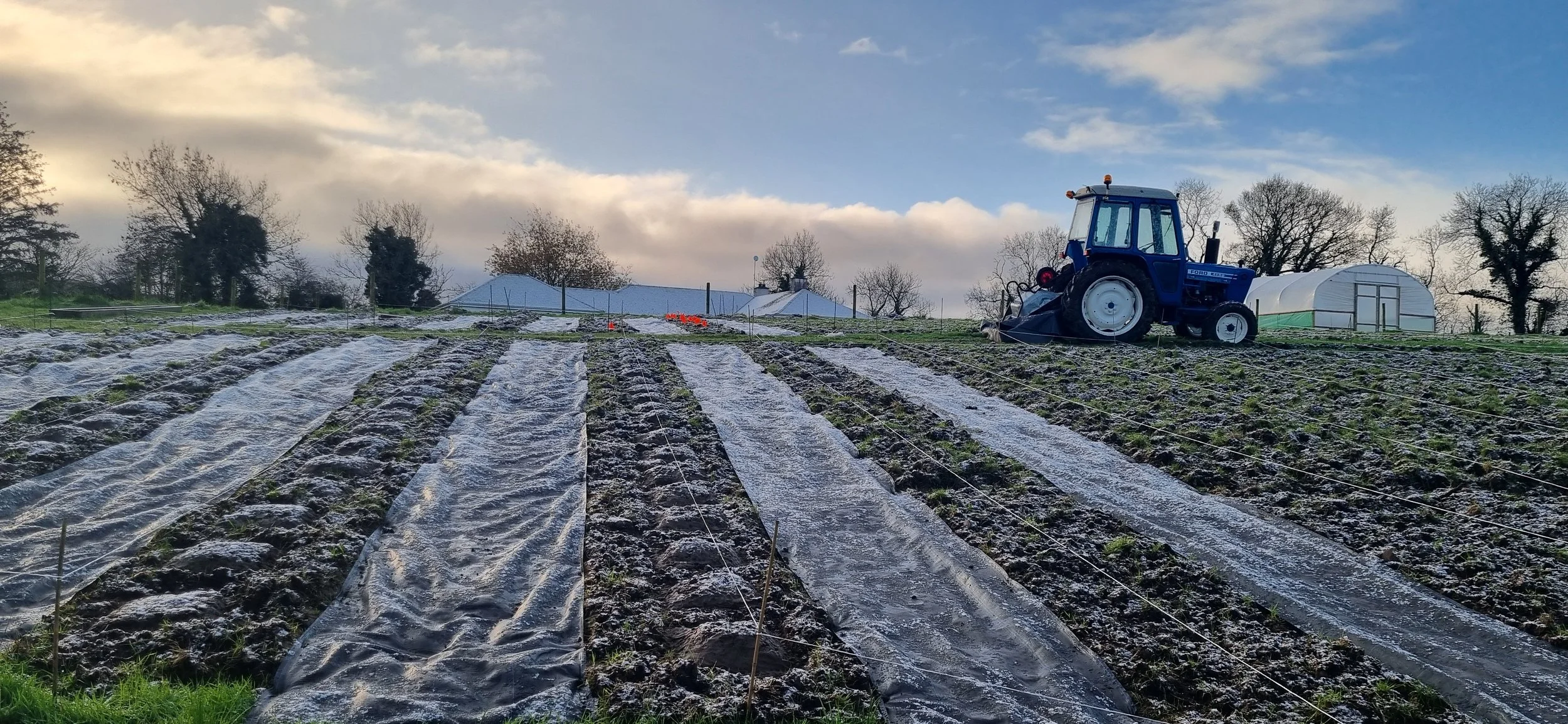
An autumn frost over our first peony field last year.
This year we’re growing over 140 seed-raised varieties, plus an extensive programme of bulbs, corms and dahlias - with more than 240 dahlia varieties alone, we have a shared obsession with the endless beauty offered so generously by the flowers we love. Our 1,000+ peonies are already waking up with enthusiasm, and our quiet plans to continue adding more are a work in progress.
We know that our farm, and our business, will evolve over time - after all, we all have our seasons and cycles, and it’s a process of allowing and adapting, moving with the natural rhythms and being open to what comes next.
I’ll be sharing mostly behind the scenes here at the farm on the blog - as this is our first commercial year of operation there is so much to learn, so many opportunities to make mistakes and deepen our knowledge of this industry! Not to mention the anxiety and uncertainty of an ever changing landscape.
My hopes are to share the ups and downs with anyone who may be interested, to show what it takes to run a flower farm regeneratively and to share our love and joy of flowers with the world - because sometimes we all need a reminder of what’s really important in life: gratitude for the gifts of nature, the lessons of patience and acceptance, and the way flowers can bring people together.
Jules x
